You Can't Recall a Structure You Never Built
- #encode
- #building-in-public
- #data-analytics
- #retrieval-practice
For three sessions I’d tried to lock one definition — “data ecosystem,” from the first module of the Google Data Analytics certificate — and three times I left without it. Same failure each time: reach for the whole thing at once, get the first word, stall. This session I threw the approach out.
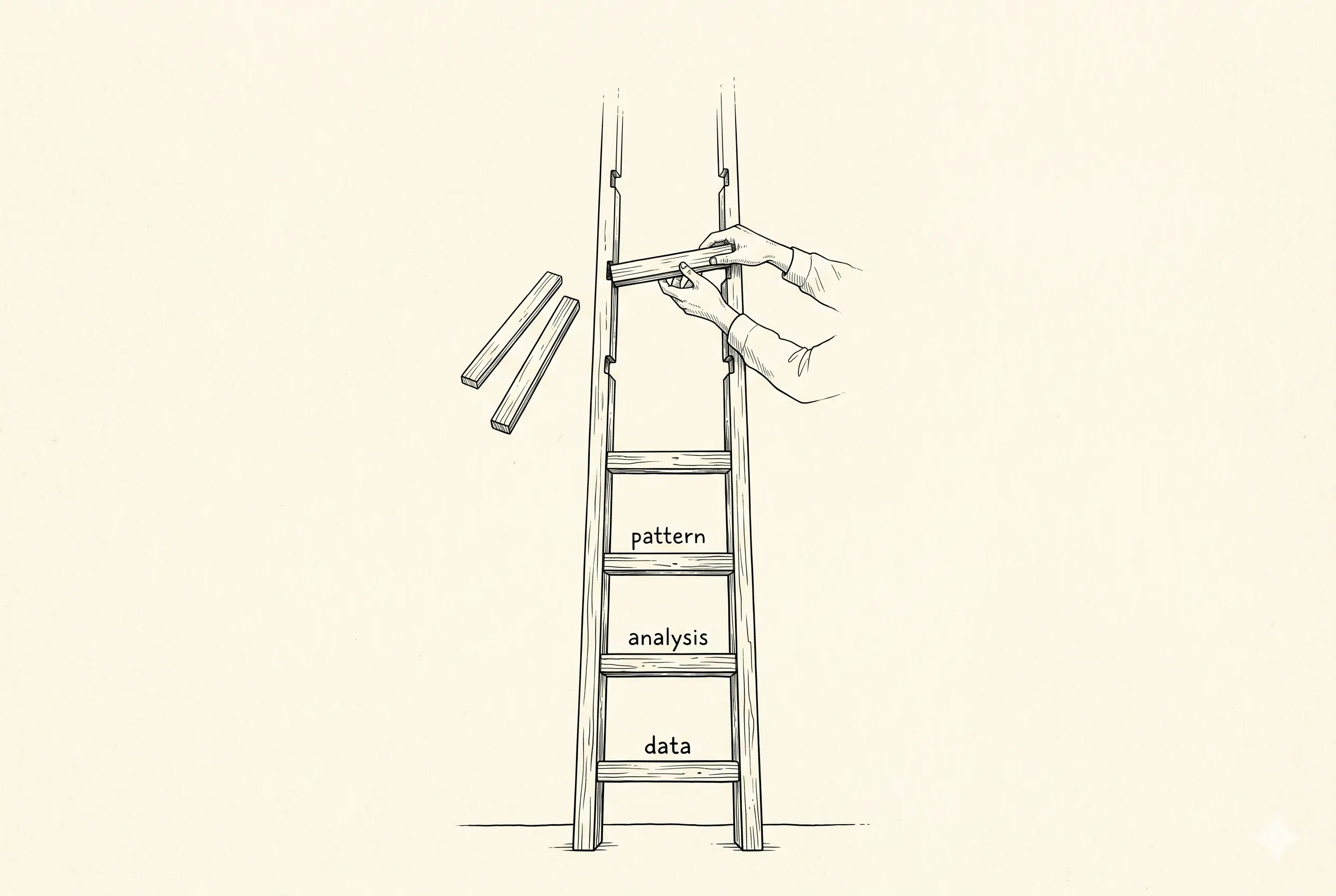
Clean slate. I watched and read the next batch of material, then went back to the start and built the ideas up from the floor instead of memorizing any of them whole. What is data? A collection of facts. Say it back, lock it, move on. What does analysis do? Turns data into insights — not artifacts. An artifact is a chart; an insight is the understanding itself: “a long, complicated hiring process is what makes new hires quit.” Lock that. Then the everyday shape — pattern, relationship, prediction, action. Then where analytics sits. Then the six steps a project walks. Then the four kinds of analysis. Six ideas, each its own rung, each tested before the next.
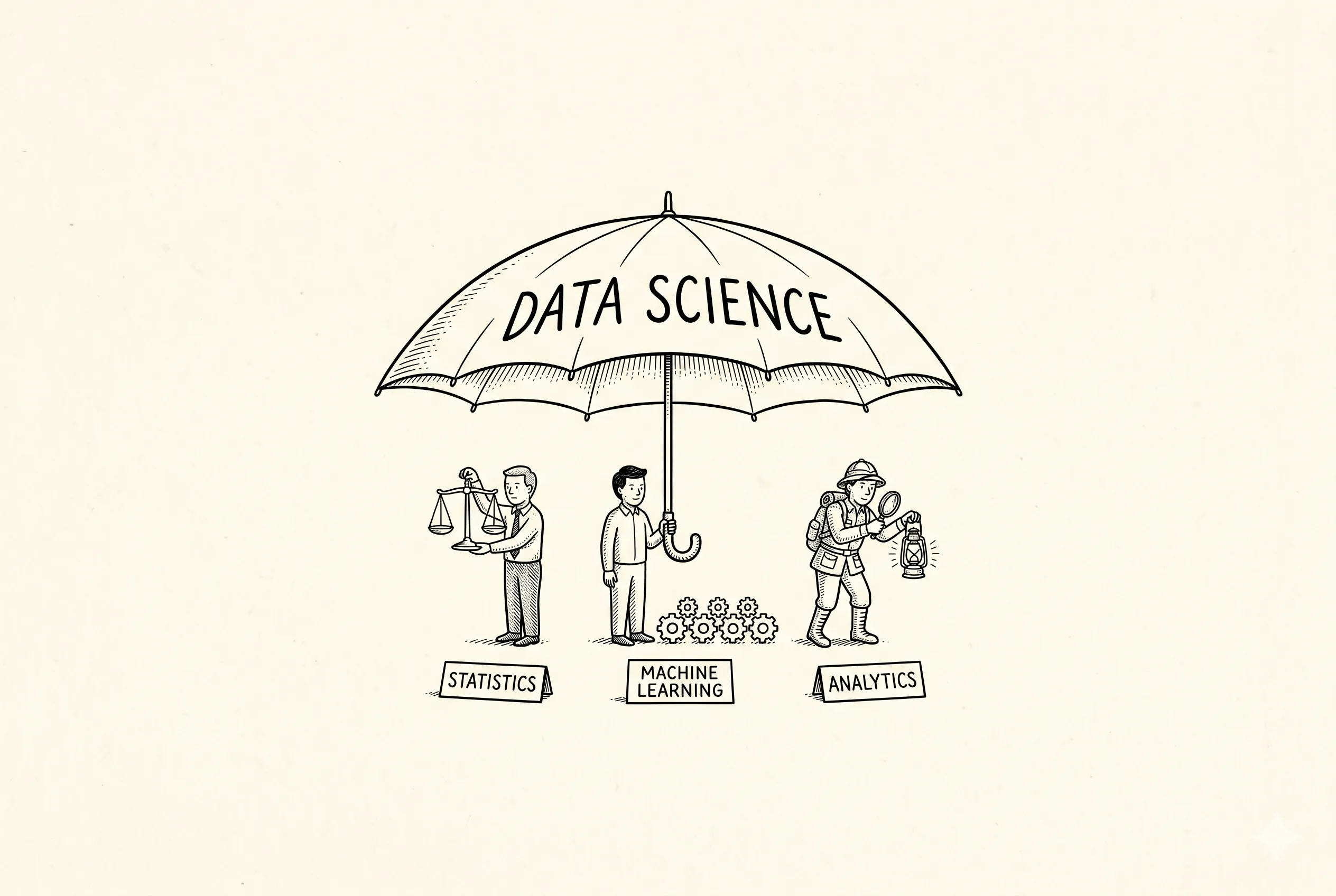
The thing that had tripped me for weeks came apart on rung four. I kept treating data analytics and data science like rival labels. They’re not. Data science is the umbrella; analytics is one of three things under it, beside statistics and machine learning. What splits them is almost funny: how many decisions you already know you want to make before you start. A few, made carefully — statistics. Many, automated — machine learning. Don’t know yet, still exploring — analytics. I’d read that three times before. It only held once I had the umbrella to hang it under.
Here’s what the three failed sessions had in common: I was trying to pull down a structure I’d never assembled. A definition memorized as one long sentence has nothing to grab — slip once and you free-fall to “I don’t know” and stop. An idea built one rung at a time leaves a ladder behind it; each piece you lock becomes the cue for the next. When retrieval slips, it has somewhere to put its feet.
So build first, test each rung, and save the cold top-to-bottom walk for the end, as the seal — not as the opening move on material you haven’t built. When I finally walked all six rungs from memory, I still slipped twice. But every slip had a handhold, so I caught it and re-locked it instead of falling. That’s the difference between a finished rep and another stalled one.
I cared enough to build the same ladder into my site as a scoreable quiz — type it from memory, get it wrong, watch the missed ones come back first. Tomorrow I find out how much is still standing after a night’s sleep. That’s the only test that counts.